


So you want to open a coffee shop? Honestly, it is not as complicated as people make it sound. Yeah, there is work involved, but if you have got the passion for coffee & a decent plan, you can totally do this.
Here is something nobody tells you upfront: 60% of cafes fail within the first year. But before you get scared, know this. Most failures happen because people skip the basics, not because the business model is broken. The cafes that survive? They do the boring stuff right.
1. Why Opening a Coffee Shop Makes Sense
Look, opening a cafe is about creating a vibe where people want to hang out. You become your own boss, serve something you love, & build a community space. The coffee scene is growing like crazy right now. People are not just drinking coffee anymore, they are experiencing it.
Real Numbers: The global coffee shop market hit $201.8 billion in 2023 & is expected to reach $371.4 billion by 2031. That is massive growth we are talking about.
But let me be real with you. It is hard work. Early mornings are no joke. Long hours, equipment issues, staff drama. All that comes with the package. But if you love the hustle & enjoy connecting with people, it can be super rewarding.
“The coffee business is about people, not just coffee. If you focus on creating a third place between home & work, you will succeed.” – Howard Schultz, Former Starbucks CEO
For any sort of business you need to have a good plan in mind. The vision or we can say end goal is very important. Without that, you are just wandering around hoping things work out.
2. Planning Your Coffee Shop
2.1 Figure Out Your Cafe Type
Not every coffee shop needs to be the same. Pick what works for your situation.
Here is a comparison table to help you decide:
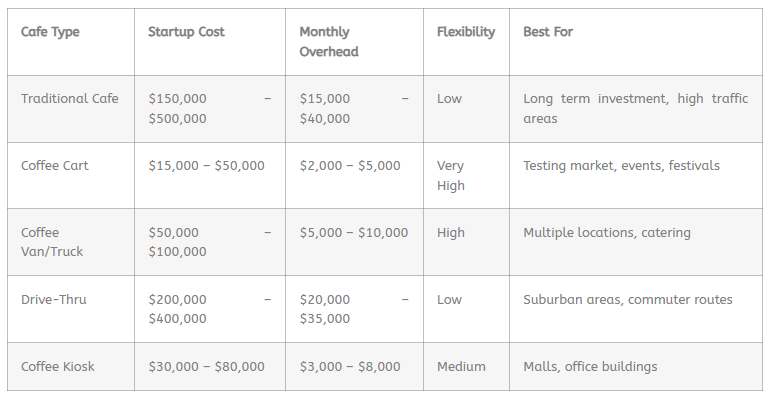
Controversial Opinion Alert: Most cafe owners go for traditional setups because they think it looks more “professional.” Wrong move tbh. Some of the most profitable coffee businesses started with carts & vans. Lower overhead means you get to profitability faster & can test your concept without betting the house.
Take any successful coffee brand you know. Most of them started small, focused on quality, & then scaled up. They did not jump into massive investments on day one.
2.2 Do Your Research Properly
Before you jump in, you need to check things out. Walk around where you want to open. How many cafes are already there? What are they doing? What are they missing?
Secret Nobody Shares: The best cafe locations are not always the busiest streets. Sometimes a slightly quieter street with lower rent & less competition makes you more money. I have seen cafes on prime locations fail while ones two blocks away thrive because their economics made sense.
Talk to locals. Would they come to your place? What do they want that they are not getting? Check the crowd at different times. A dead weekend spot might be perfect for weekday office traffic.
Real Example: A cafe owner told me he almost signed a lease in a premium mall. Monthly rent was crazy high. Instead, he took a space near a co-working hub for way less. He makes more profit because his target customers (freelancers & remote workers) are right there, & his costs are manageable.
Look at what is trending. Cold brew, specialty coffee, plant based milks. These things matter to customers right now.
2.3 Your Business Plan Matters
Yeah yeah, business plans sound boring. But trust me, you need this. It forces you to think everything through before spending money. For any sort of business you need to have a good plan in mind.
Cover your concept, target customers, competition, menu, pricing, marketing, & money projections. How much for a latte? How many customers daily to break even? What makes you different from every other cafe?
Here is the Math Nobody Does:
If your monthly expenses are $20,000:
- Average sale per customer: $15
- You need 1,333 customers monthly just to break even
- That is 44 customers daily (assuming 30 day month)
- With 50% profit margin on each sale, you need 88 customers daily to make decent profit
Do this calculation for YOUR numbers. Most people guess. Winners calculate everything properly.
“In the restaurant business, you can have the best concept, but if your numbers do not work, you will fail. Know your numbers cold.” – Danny Meyer, Restaurateur & Author
If you need funding, banks want to see this. Even if you are funding yourself, it keeps you on track & helps you make smart decisions.
3. Getting Legal Stuff Done
3.1 Register Your Business
Pick your business structure first. Sole proprietorship, partnership, or company. Each one has different tax & legal stuff. Talk to an accountant about what works for your situation.
Controversial Take: Most small cafe owners go sole proprietorship to save costs. Big mistake if you plan to grow. Start as a proper company structure from day one if you are serious. Yes, it costs more upfront, but you get liability protection, easier funding options, & a structure ready for scaling.
Register your business name. Make sure it is unique & nobody else is using it. Get your registrations done properly. Keep business & personal money separate from day one. This is super important.
3.2 Licenses & Permits You Need
This part is not exciting but you cannot skip it. You need to take care of all the legal formalities like licensing & permits before you open.
Food Business License: Every cafe needs this. Local council will inspect & approve your setup.
Health & Safety Permits: They check your kitchen, storage, hygiene. Everything needs to meet standards.
Council Permits: For your signage, outdoor seating, all that stuff. Different councils have different rules.
Music License: Playing music? You need to pay for it. Even streaming services require commercial licenses.
Liquor License: Serving alcohol? Separate application & can take months to process.
Real Timeline:
- Food License: 1 to 4 weeks
- Trade License: 2 to 6 weeks
- Health License: 1 to 3 weeks
- Fire Safety: 4 to 8 weeks
- Other Permits: 2 to 4 weeks
Total: 2 to 3 months minimum. Start this process BEFORE you sign the lease or you will be paying rent while waiting for approvals.
3.3 Get Your Certifications
Food safety training is mandatory for you & your team. Covers handling, storage, hygiene. At least one certified person needs to be there during operations.
Alcohol service also needs certification if you are doing that.
3.4 Insurance Is Important
Get public liability insurance minimum. Covers you if customers have accidents or issues. Also insure your equipment, stock, & space. If you have staff, workers compensation is required by law.
Cost Breakdown:
- Public Liability: $800 to $1,500 annually
- Property & Equipment: $1,200 to $2,500 annually
- Workers Compensation: Varies by staff count
Do not skip insurance thinking you will save money. One accident can shut you down permanently.
4. Location & Setup
4.1 Finding Your Spot
Location is a necessary key element to build traffic. Choose a good location which can bring you customers. This is probably the most important decision you will make.
High visibility, good foot traffic, easy access. Near offices, colleges, gyms works well. Transit hubs are gold if you can afford them.
The 3-3-3 Rule (Industry Secret):
- 3 minutes walk from your target customer base
- 3 competing cafes or less within 500 meters
- 3 month rent as security deposit maximum
Read your lease properly. What can you change? How long is the commitment? What happens if things do not work out? Can you sublet if needed?
Negotiation Hack: Most landlords list rent at 20% to 30% higher than they will accept. Always negotiate. Ask for 2 to 3 months rent free period for setup. Many landlords agree if it means locking in a good tenant long term.
Plan your layout smart. Customer flow is key. Ordering, waiting, pickup should not create chaos. You need space for equipment, storage, & staff movement without bumping into each other.
“Location decisions should be made with a 10 year view, not a 1 year view. The right location compounds your success.” – David Chang, Chef & Restaurateur
4.2 Mobile Options
Carts & vans need less money upfront. Small amount of investment gets you started. You can try different locations, see what works. But you still need permits for wherever you operate.
Success Story: One entrepreneur started with a coffee cart outside office parks. Investment was minimal. He made good profit within 6 months. After 2 years, he opened his first cafe. Now he has multiple locations. Started smart, scaled smart.
Vans & trucks need proper fitting with plumbing, electrical, safety stuff. Water tanks, waste management, power, everything mounted safely. More investment than a cart but still way less than a full cafe.
Trailers are popular because any vehicle can tow them. Great for events & markets. Just check your vehicle can handle the weight properly.
5. Money & Startup Costs
5.1 What It Actually Costs
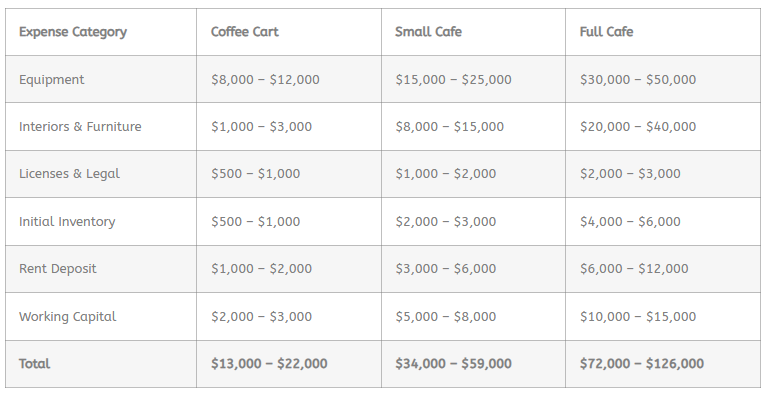
Depends on your setup, but here are realistic numbers. Small amount of investment means different things for different setups:
Read More: How Much Does It Cost to Start & Open a Coffee Shop or Cafe in Australia?
Big expenses are equipment, interior work, rent deposits, initial stock, & working capital. You need buffer money for first 3 to 6 months while building your customer base.
Brutal Truth: Most cafe owners budget for 3 months working capital. They should budget for 6 to 9 months. This is why they run out of money right when the business starts picking up. Do not make this mistake.
5.2 Equipment Investment
Commercial espresso machine is your biggest buy. Good ones run $8,000 to $30,000+. Get a quality grinder too, this matters more than people think. The grinder is actually more important than the machine for coffee quality.
Plus brewing gear, fridges, display cases, & a restaurant POS system for smooth operations.
Equipment Priorities (What to Splurge & Save On):
Splurge:
- Espresso machine (quality brands like La Marzocco, Nuova Simonelli)
- Grinder (Mazzer, Eureka, Mahlkonig)
- Water filtration system (coffee is 98% water, this matters)
Save:
- Furniture (buy second hand, refinish it yourself)
- Decor (DIY or local artisans are way cheaper)
- Initial crockery (upgrade later when you have cash flow)
Modern POS does way more than billing. Tracks inventory, manages staff, creates reports, shows customer patterns. When planning your budget, check restaurant POS cost because it ranges from basic $1,000 setups to advanced $10,000+ systems with monthly fees. Worth the investment for proper systems from day one.
You also need kitchen equipment, ovens, dishwashing setup. Plus all your serving stuff. Do not cheap out on essentials but do not overspend on things customers never see.
5.3 Getting Funding
Most people mix personal savings with bank loans, maybe some investor or family support. Banks want solid plans & usually need 20% to 30% upfront as your contribution.
Funding Options Comparison:
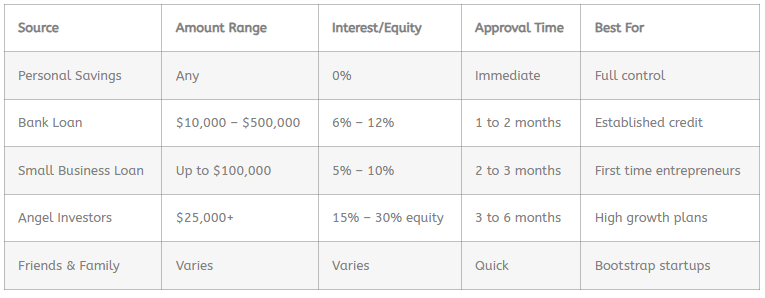
Check for government schemes or small business loans in your area. Some offer good rates for food businesses specifically.
6. Your Menu
6.1 Coffee Selection
Coffee is your hero product. Partner with a quality roaster who trains you & supplies consistent beans. Cover the basics (espresso, latte, cappuccino, flat white) but add signature drinks too.
Pricing Psychology (Industry Secret):
Most cafes price like this:
- Espresso: $3.00 to $4.50
- Americano: $4.00 to $5.50
- Latte/Cappuccino: $4.50 to $6.50
- Specialty drinks: $6.50 to $9.00
But here is what works better: Price your signature drink at the high end ($8 to $10) & make it AMAZING. This makes your regular latte at $5.50 seem reasonable. Plus, 20% of customers will try the expensive one, boosting your average bill significantly.
Alternative milks are non negotiable now. Oat, almond, soy, lactose free. Customers expect options as standard.
Seasonal drinks keep things fresh. Cold stuff in summer, warm spiced drinks in winter. Limited time offers create urgency.
“Your menu is your brand voice. Every item should tell your story.” – Alice Waters, Chef & Author
6.2 Food Items
Start simple. Few items done really well beats a huge menu done badly. Fresh bakery items work great. Simple breakfast stuff, toasted sandwiches, maybe some salads.
Menu Size Sweet Spot: Research shows cafes with 12 to 18 food items have higher profit margins than those with 25+ items. Why? Less waste, faster service, better quality control. Keep it tight.
Cover dietary needs. Veg, vegan, gluten free options matter now. You do not need 50 items, just good ones that cover main dietary requirements.
Price to cover costs plus profit. Coffee margins are good (60% to 80%) but food needs careful calculation. Keep food costs under 30% of menu price.
Controversial Opinion: Stop trying to be everything to everyone. The most successful cafes have STRONG opinions about what they serve. All day breakfast only. Vegetarian only. No laptops after 12pm. These “limitations” actually attract loyal customers who love what you stand for.
If you want to do delivery or pickup, add a food ordering system. Customers can order ahead, boosts revenue without needing more seats. Modern systems connect with your POS making everything smooth & you do not lose orders in chaos.
7. Staff & Training
7.1 Hiring Right
Baristas are your frontline. Look for good attitudes & willingness to learn. Experience helps but enthusiasm & customer skills matter way more.
Real Salary Data:
- Junior Barista: $15 to $20 per hour
- Experienced Barista: $22 to $30 per hour
- Head Barista: $30 to $40 per hour
- Cafe Manager: $45,000 to $65,000 annually
Pay fairly. Good people are worth it. High turnover costs you in training & customer relationships.
Industry Secret: Staff turnover costs you 2x to 3x their monthly salary in lost productivity & training new people. Paying a bit more per hour to keep good staff saves you thousands annually in turnover costs. Invest in people.
7.2 Training Is Key
Even experienced baristas need training on your setup & standards. Consistency is everything. Every drink should taste the same no matter who makes it.
Customer service training matters equally. Friendly, quick service brings people back more than fancy coffee tbh.
Training Investment:
- Barista Skills: $500 to $1,500 per person
- Customer Service: $200 to $500
- Food Safety: $150 to $300
Worth every dollar. Trained staff make you more money & create fewer problems.
8. Marketing Your Cafe
8.1 Build Hype Before Opening
Start social media early. Share progress, introduce team, show menu. Build excitement in your community.
Pre-Launch Timeline:
- 3 months before: Announce location, start teasing
- 2 months before: Behind the scenes content, menu reveals
- 1 month before: Countdown, soft opening announcements
- 2 weeks before: Influencer previews, media coverage
- Opening week: Grand opening event, special offers
Do a soft launch with friends, family, local influencers. Get feedback, fix issues before the big day. This saves you from disasters during grand opening.
Make your grand opening an event. Samples, offers, music, whatever creates buzz in your area.
8.2 Keep Customers Coming
Social media is your friend. Daily specials, new items, behind the scenes stuff. But be real, not just ads. People can smell fake marketing from miles away.
Content That Actually Works:
- Staff spotlights (people love faces & stories)
- Coffee brewing tutorials (educational content builds authority)
- Customer features (with permission obviously)
- Daily specials with good photography
- Behind the scenes chaos (authenticity wins every time)
Loyalty programs work. Simple stuff like every 10th coffee free. People love feeling rewarded.
Loyalty Program Stats: Cafes with loyalty programs see 25% to 40% higher customer retention & 15% to 20% higher average order values. The numbers do not lie.
Connect with your community. Support local stuff, host events, give back. People support businesses that care about the community.
8.3 Use Modern Tech
Customers want convenience. A QR code ordering system lets people order from their phones at their table. Cuts wait times during rush, frees up staff for making coffee, & often increases order sizes because people browse properly without feeling rushed.
Tech ROI:
- QR ordering increases average order by 12% to 18%
- Online ordering adds 20% to 30% to revenue
- Digital loyalty programs have 3x higher engagement than punch cards
Technology is not optional anymore. Embrace it or get left behind.
9. Daily Operations
9.1 Opening Routine
Every day starts the same. Unlock, fire up equipment, check stock, prep. Consistency means nothing gets forgotten & service runs smooth.
Standard Opening Checklist:
- Equipment warmup (30 minutes before opening)
- Cash float setup
- Stock check & prep
- Cleanliness inspection
- Staff briefing on specials & issues
9.2 During Service
Peak times get crazy. You need systems. Good team communication, smooth workflow, quality checks. Everyone gets fast service & great coffee regardless of how busy you are.
Speed Targets (Industry Standard):
- Order to first coffee: Under 4 minutes
- Simple drinks: 2 to 3 minutes
- Complex drinks: 4 to 5 minutes
- Food items: 8 to 12 minutes
Keep things clean constantly. Tables, machine, restocking. Customers notice cleanliness big time. A dirty cafe loses customers faster than bad coffee.
“Operations is not about working harder, it is about working smarter. Systems beat hustle every time.” – Ray Kroc, McDonald’s Founder
9.3 Money Management
Track everything. Daily sales, expenses, waste, hours. Use your POS reports. Know your numbers or you cannot improve them.
Key Metrics to Track Daily:
- Total sales
- Average transaction value
- Customer count
- Waste percentage
- Labor cost percentage
- Top selling items
Watch cash flow. Money in needs to cover money out plus profit. Many cafes fail from bad money management, not lack of customers.
Target Profit Margins:
- Coffee: 65% to 80%
- Food: 50% to 65%
- Overall gross margin: 60% to 70%
- Net profit margin: 10% to 15% (good cafe)
If your margins are lower, find out why & fix it fast.
10. Mistakes To Avoid
Do not underestimate money needs. Running out of cash early kills businesses faster than anything else.
Location is hard to fix. Choose wrong & you are stuck or paying to break lease.
Skipping planning & research is asking for trouble. Hope is not a strategy in business.
The 7 Deadliest Cafe Mistakes (Based on Failed Cafes):
- Underpricing to compete (You cannot out-cheap big chains, do not try)
- Over-renovating on day one (Fancy interiors do not fix bad coffee or service)
- Hiring friends & family without skills (Loyalty does not equal competence unfortunately)
- No marketing budget (If you build it, they will NOT automatically come)
- Ignoring customer feedback (Pride kills businesses, listen to customers)
- Expanding too fast (Master one location first before dreaming of empire)
- Treating it like a hobby (Part time effort gets part time results, commit fully)
Trying to do everything alone leads to burnout within months. Build a team you can trust.
Ignoring marketing means nobody finds you. Even the best coffee needs customers to know you exist.
11. Is This For You?
Opening a cafe needs serious commitment. You will work harder than ever. Early starts, late finishes, weekends, holidays. It is physically & mentally tough.
Financial risk is real. Most cafes take 6 to 18 months to profit. Can you handle that stress & uncertainty?
Reality Check Questions:
- Can you wake up at 5am six days a week for years?
- Can you handle 6 to 9 months of minimal income while building?
- Are you okay with smelling like coffee all day every day?
- Can you deal with difficult customers calmly even on bad days?
- Will your family support this crazy schedule long term?
If you answered no to any of these, reconsider or find a partner who complements your weaknesses.
But if you love coffee, enjoy people, & want to build something meaningful, it is amazing. Regulars becoming friends. Being part of neighborhood life. Creating a space people love & depend on.
Look at success stories everywhere. People who started small & built empires. Once you build a loyal customer base, you can easily spread your business all over. The key is starting right & building that loyal base first.
Real Example: Think about entrepreneurs like the founder of any major coffee chain. They started with a small business but now have outlets not just locally but internationally. The pattern is always the same. Start small, build loyal customers, deliver quality consistently, then scale.
12. Your Action Steps
Ready? Here is the plan:
Next 30 Days:
- Visit 20+ cafes in different areas, take detailed notes
- Interview 3 to 5 cafe owners about their experiences
- Complete thorough market research in your target area
- Draft business plan outline with realistic numbers
- Calculate your actual budget honestly
Months 2 to 3:
- Finalize complete business plan with all details
- Approach banks or investors with your plan
- Shortlist 3 to 5 potential locations
- Apply for business registration
- Connect with equipment suppliers & get quotes
Months 4 to 6:
- Sign lease after proper negotiation
- Apply for all required licenses & permits
- Buy equipment & start setup
- Hire & train your team properly
- Develop final menu & test everything
- Build strong social media presence
- Soft opening with feedback group
Month 6+:
- Grand opening event that creates buzz
- Focus on daily operations excellence
- Track all metrics religiously
- Adjust quickly based on data & feedback
- Build deep community presence
- Work towards profitability milestones
13. Final Thoughts
Starting a cafe is not as scary as it sounds tbh. Plan properly, work hard, stay focused on what matters. Serve great coffee, create good vibes, connect with people genuinely.
The Truth About Success: The cafes that make it are not always the ones with the best coffee. They are the ones with good coffee, smart operations, & strong community connections. Excellence in execution beats perfection in concept every single time. Remember this.
Start small if needed. Cart to van to cafe. Many successful places started tiny & scaled up smartly.
Keep learning constantly. Take courses, visit other cafes, listen to feedback without ego. Stay curious, keep improving daily.
Remember why you are doing this. Tough days will come for sure. Your passion & vision keep you going through those times.
One Final Secret: Your first location is your real education. You will learn more in 6 months of running a cafe than 6 years of reading about it. So stop overthinking every little detail, start doing. But do it smart with proper planning.
For any sort of business you need to have a good plan in mind. The vision or we can say end goal is very important. Keep that vision clear, work towards it daily, & adjust as needed based on reality.
Location is a necessary key element to build traffic so choose wisely. Small amount of investment done right beats massive investment done wrong. Take care of all the legal formalities properly. Once you build a loyal customer base, you can easily spread your business all over just like successful entrepreneurs have done.
Now get planning. Your dream cafe is waiting for you to make it real. Good luck with it!
Want to streamline your cafe operations from day one? Check out modern restaurant POS systems, food ordering systems, & QR code ordering systems that can save you hours of manual work & help you serve customers faster & better.